OUR SCIENCE
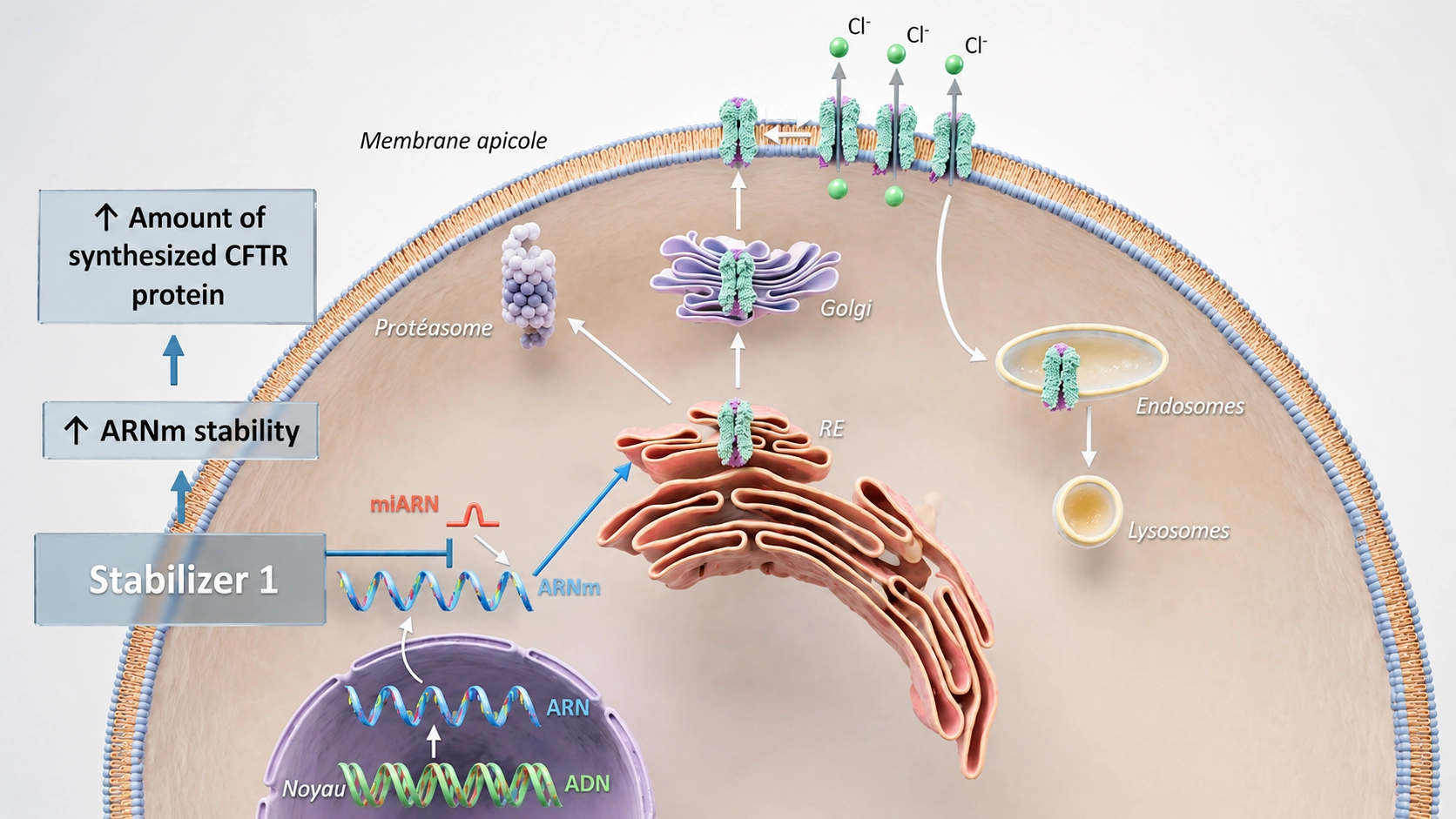
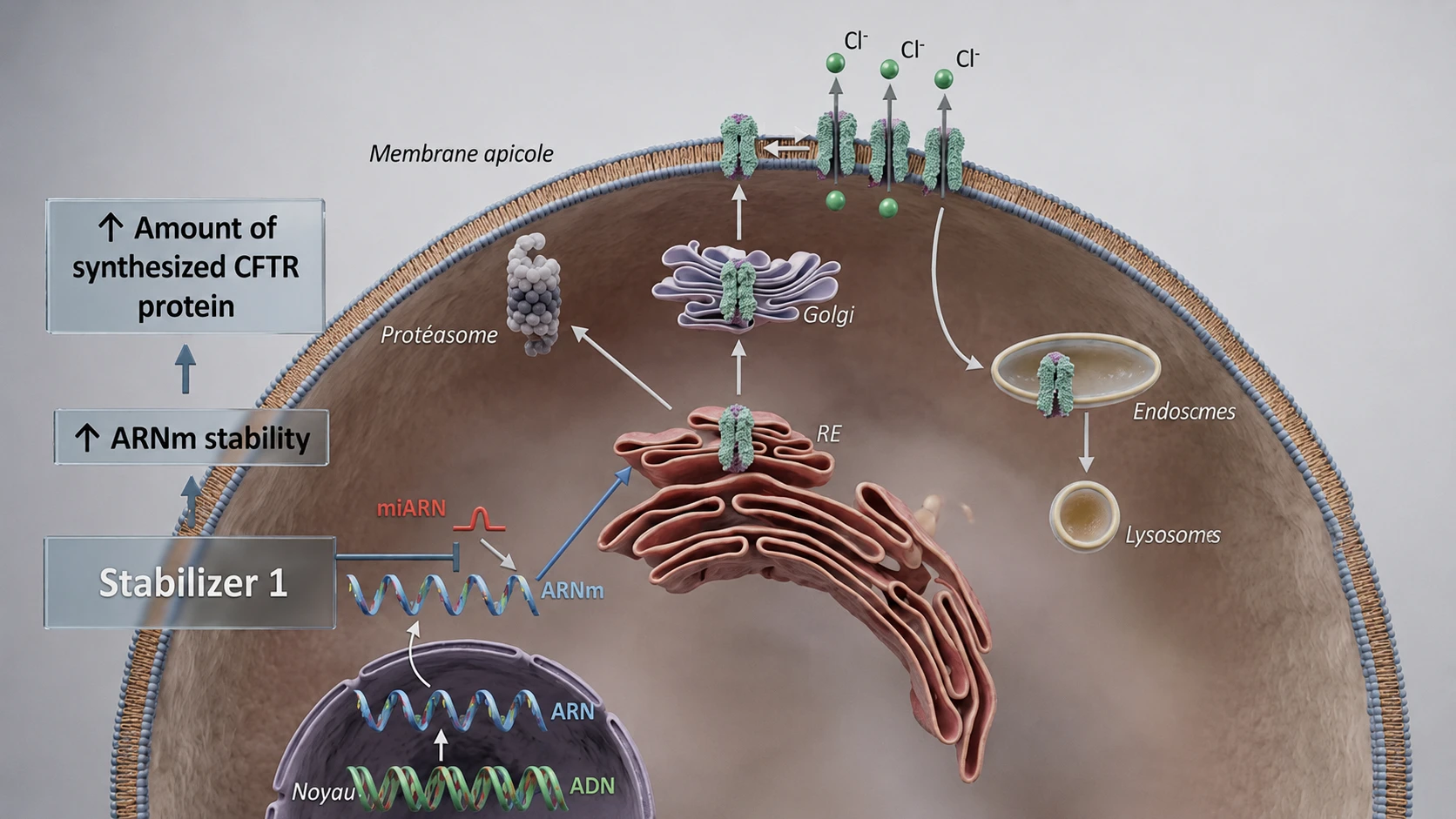
CFTR mRNA stability
ASO THERAPY (antisense oligonucleotide)
Class II mutations
Preclinical

Explore the science
From pipeline programs to enabling technologies and partnerships, discover how ACESO is building precision therapeutics for underserved patients.
Advancing a focused portfolio of precision therapeutics from discovery toward clinical impact.
Harnessing proprietary platforms, data-driven insights, and translational science to accelerate discovery.
Collaborating with scientific, clinical, and strategic partners to expand the reach of innovation.
The unmet need
Today’s CFTR modulators have transformed care for many — but a significant portion of the cystic fibrosis population still lacks an effective therapy. Class I mutations, rare genotypes, and intolerant patients remain underserved.
ACESO is built around this gap, advancing programs that aim to restore CFTR function across potential mutation classes.
162,000+
Estimated CF patients in 94 countries (> 80% in NAM and Europe)
Estimated CAGR 16% in Europe from 2008 to 2024
~20%
Underserved
Estimated CF patients non or low responder to current therapiesEconomic barrier
High treatment cost
Limited access despite broad genetic eligibility
Scientific Recognition
Karine Deletang1 and Magali Taulan-Cadars – Gene Therapy (2022) 29:399–406
– Alexandra Pommier, Jessica Varilh, Solenne Bleuse, Karine Delétang, Jennifer Bonini, Anne Bergougnoux, Emmanuelle Brochiero, Michel Koenig, Mireille Claustres, Magali Taulan-Cadars
DOI: 10.1183/09031936.00113214 – Victoria Viart1,2,3, Anne Bergougnoux1,3, Jennifer Bonini1,2, Jessica Varilh1,3, Raphaël Chiron4, Olivier Tabary5,6, Nicolas Molinari7,8, Mireille Claustres1,2,3 and Magali Taulan-Cadars1,2.
C. Felgerolle, K. Delétang, I. Pranke, B. Simmoneau, L. Damy, F. Becq, B.Duriez, P. Fanen, I. Sermet, M. Taulan-Cadars – Phymedexp, Inserm U1046 / U1151, CNRS – University of Montpellier, Creteil -France
– M. Sinane, K. Deletang, C. Felgerolle, C. Teko-Agbo, P. Boisguerin, M. Taulan-Cadars – Phymedexp, Inserm U1046, University of Montpellier, France.
The platform
Two complementary scientific pillars — restoring CFTR expression and improving CFTR stability — combined into one therapeutic platform built for patients beyond the reach of today’s modulators.
Stabilization of CFTR mRNA to increase level of CFTR protein.
Re-introducing CFTR via mRNA-targeting therapeutics to restore the protein where it is missing or absent.
Proprietary IP covering composition, synthesis, and therapeutic application.
Demonstrated functional rescue in patient-derived cellular models.
Demonstrated functional rescue in patient-derived organoid and cellular models.
Favorable preclinical safety profile supporting an accelerated regulatory path.
Get in touch